SyncPoint OS
"A Remote-First Team Operating System: Real-Time Presence & AI Knowledge."
The Vision: Overcoming Remote Friction
SyncPoint OS was designed to unify the fragmented remote workspace. By combining synchronous presence with asynchronous knowledge retrieval, it bridges the gap between 'knowing what the team is doing' and 'finding what the team knows.'
Architecture: The TNT Stack
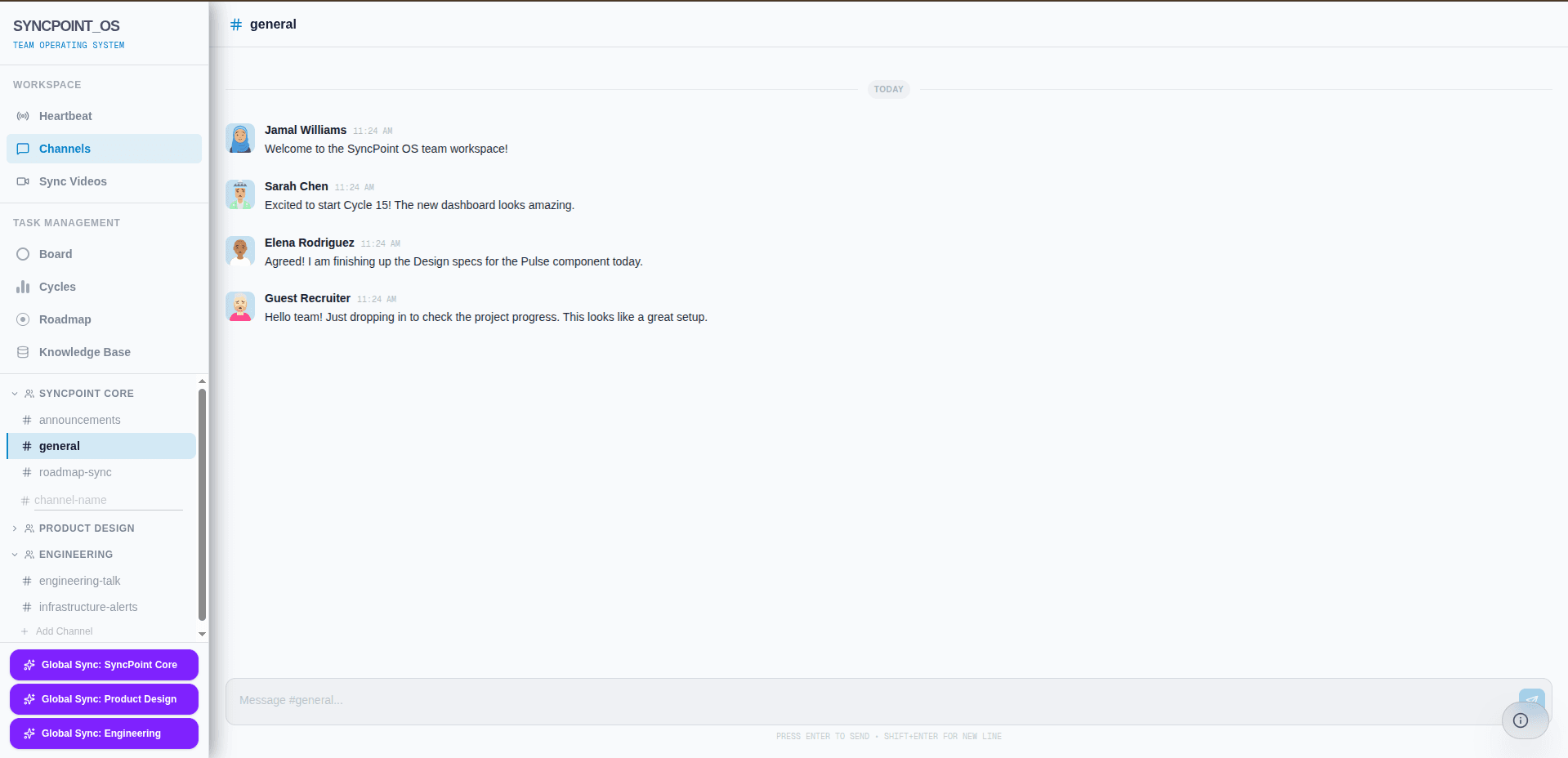
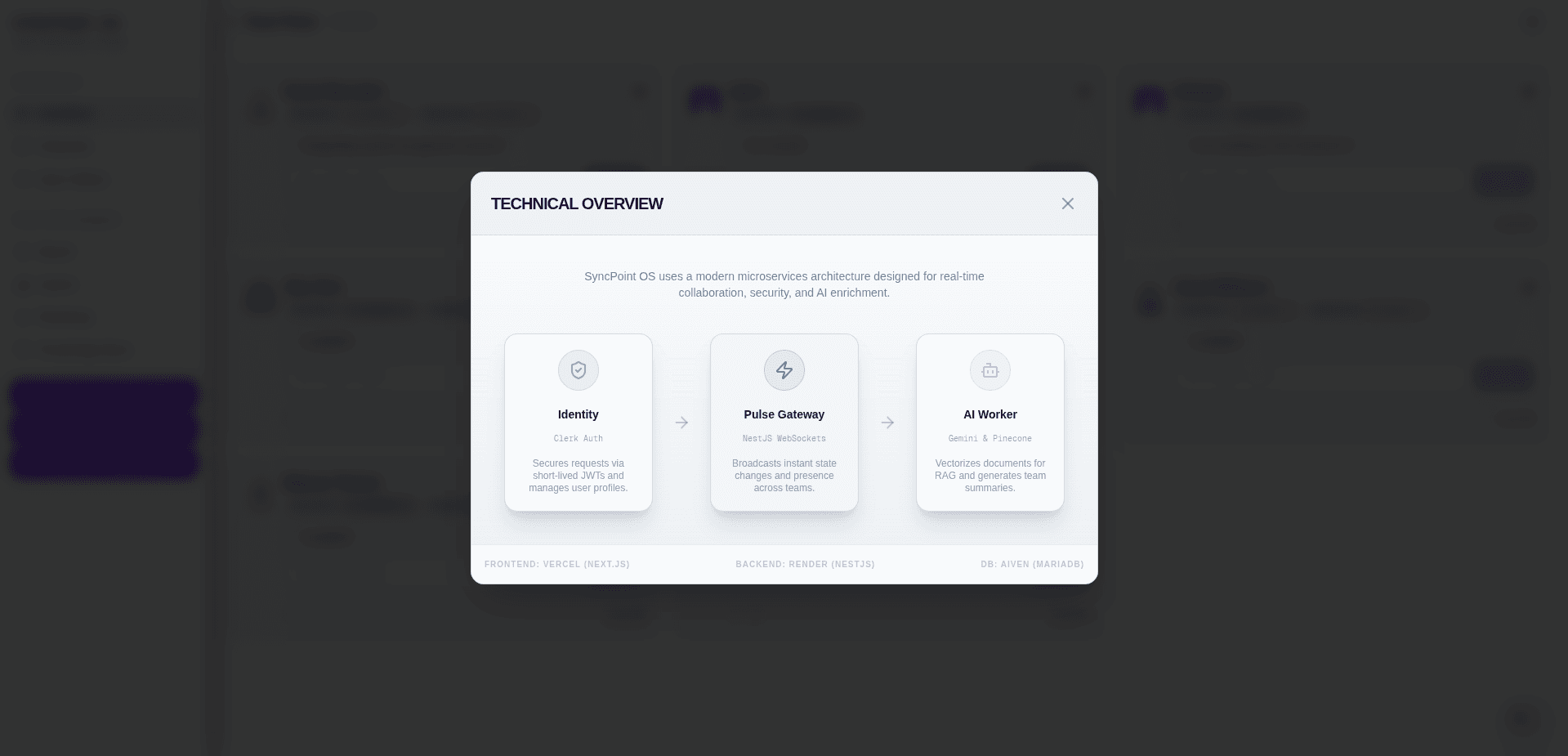
Engineered on the TypeScript-Next-Tailwind (TNT) stack, the platform utilizes Next.js for its resilient frontend and NestJS for its scalable, reactive backend. This ensures a low-latency experience for real-time features like the Pulse status update and live Kanban synchronization.
Technical Deep Dive
1. The Command Center (Team Dashboard)
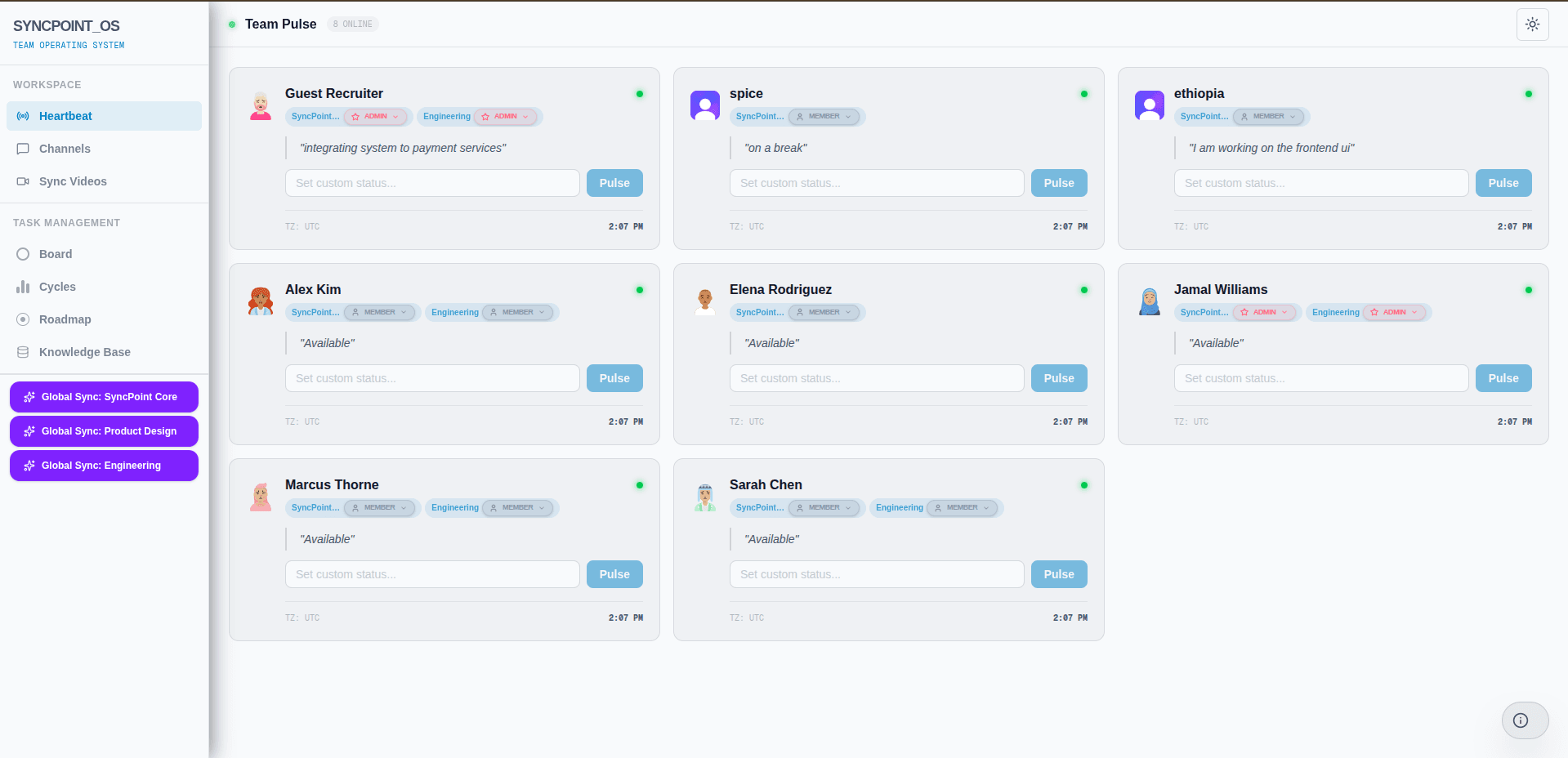
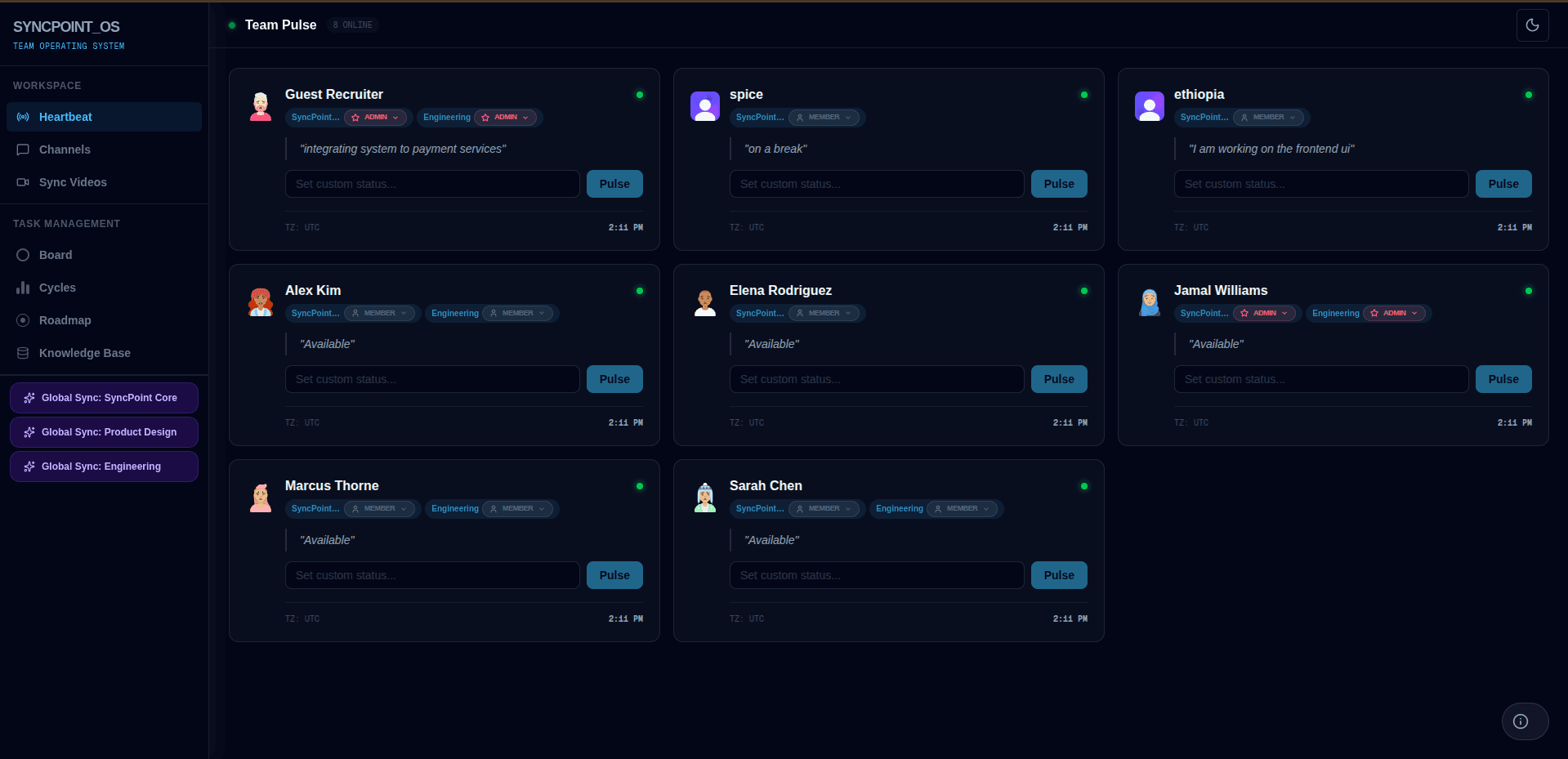
The Command Center is engineered with Next.js 15 and Tailwind CSS 4 to deliver a high-performance, responsive central hub. To solve 'timezone friction' for global teams, the MemberClock component utilizes Luxon for precise date-time manipulation, ensuring that stakeholders have an instant, accurate view of their team's availability across various geographic coordinates.
2. The Nerve System (Real-Time Presence)
This module leverages an Event-Driven Architecture to maintain a live 'pulse' of the organization. Status updates and presence signals are handled via Next.js Server Actions, which trigger instant broadcasts to all connected clients using Socket.io WebSockets on the NestJS backend, ensuring zero-latency visibility into team activity.
3. The Brain (AI Knowledge Base)
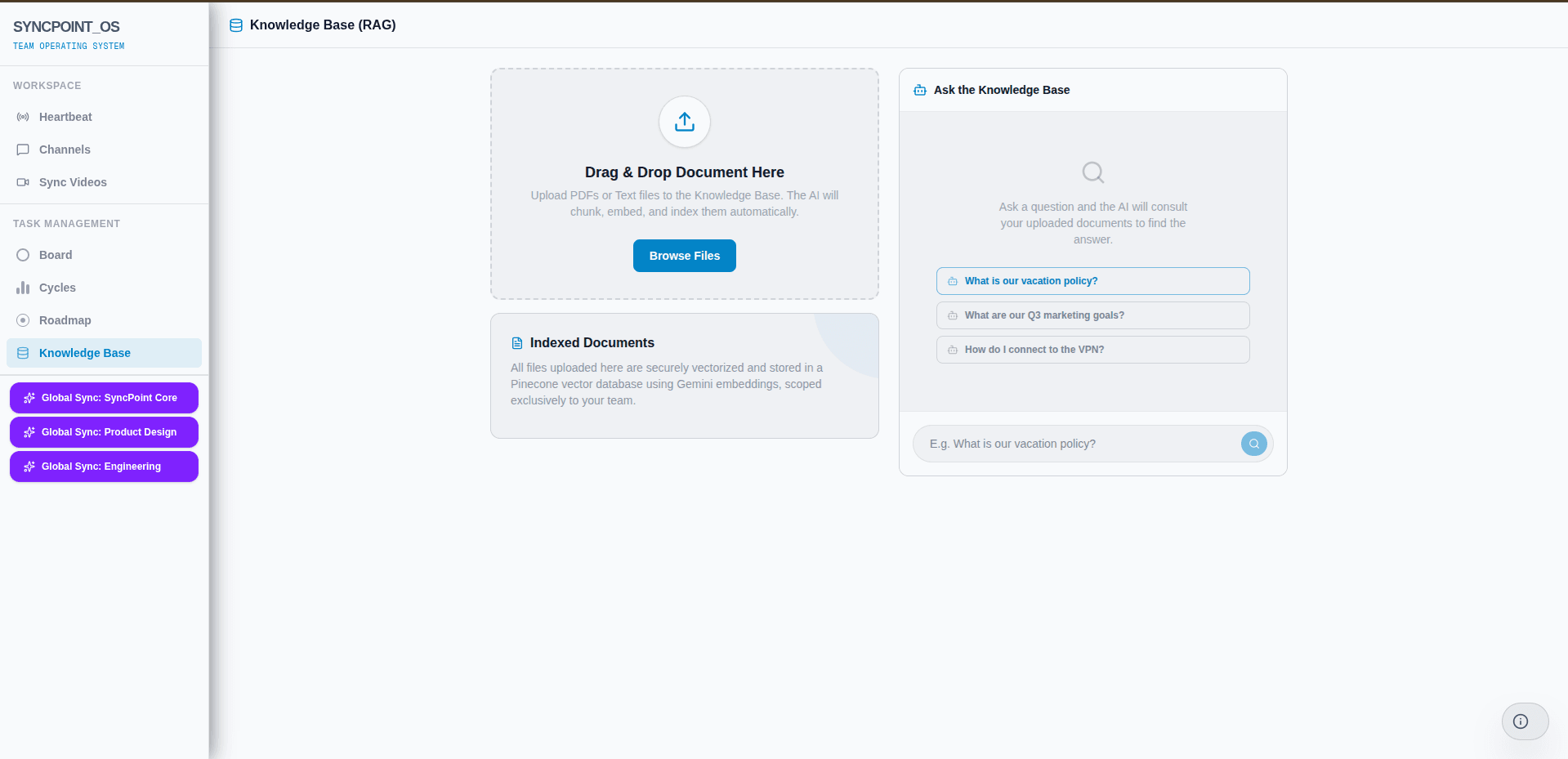
The Brain utilizes a sophisticated RAG (Retrieval-Augmented Generation) pipeline to surface relevant team intelligence. By using Pinecone for vector storage and Gemini-2.5-flash-lite for semantic search, the system retrieves documentation chunked with a 200-character overlap, ensuring that context is meticulously retained during the embedding and retrieval process.
4. The Guard (Security & Identity)
Currently optimized for rapid prototyping and demonstration, The Guard implements a streamlined identity layer. While the core architecture is designed for Clerk SSO and custom NestJS RBAC Guards, the demo version focuses on efficient session management and secure multi-tenant data isolation to showcase the platform's architectural integrity.
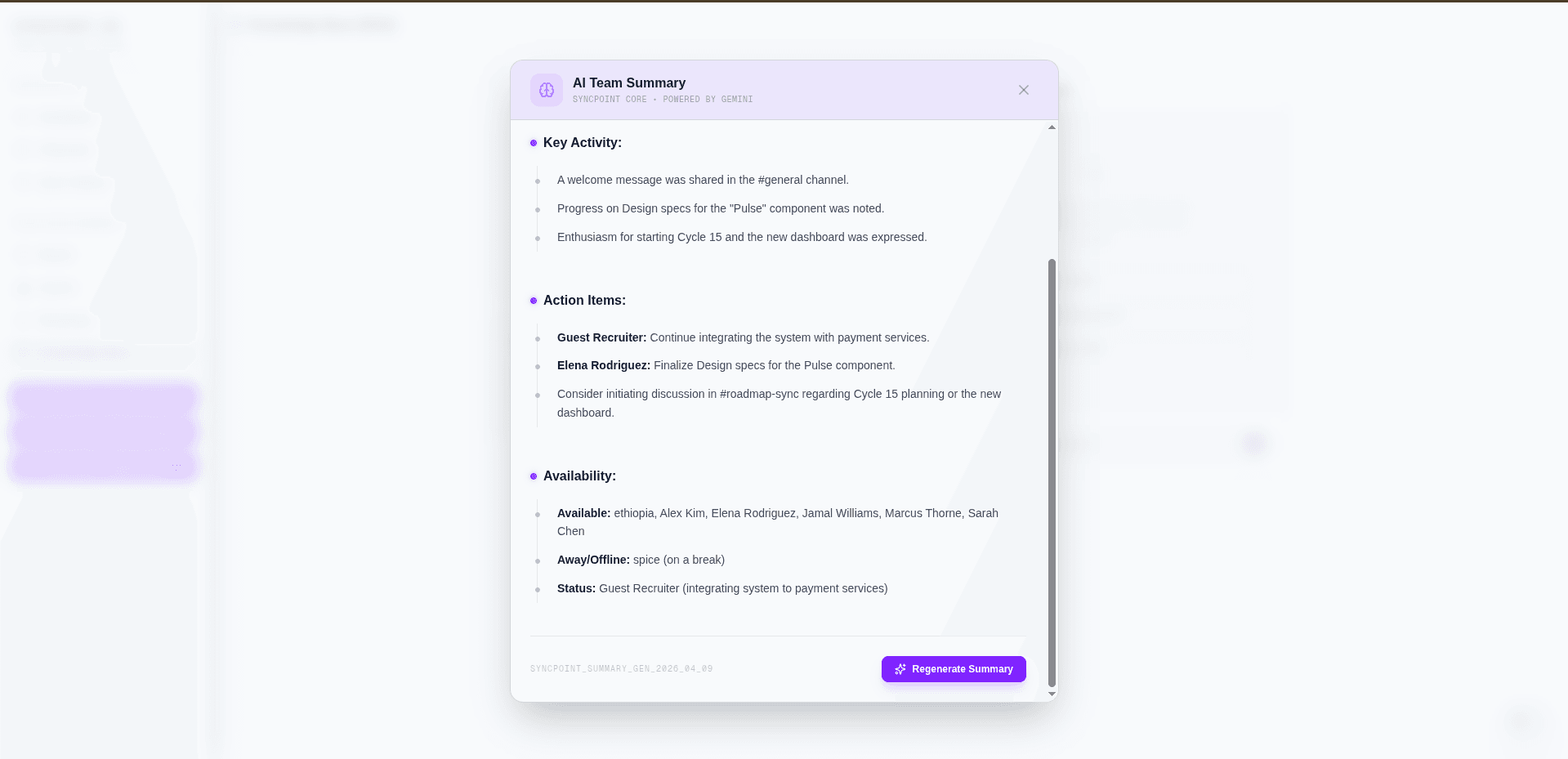
Integrated Platform DemoI utilized Clerk for the core authentication infrastructure. However, for seamless portfolio demonstration purposes, you are automatically logged in as a guest user. This allows you to explore the application and edit the status of dummy users to observe the real-time AI summarization effectiveness without needing an account.
5. The Core (Project & Data Modeling)
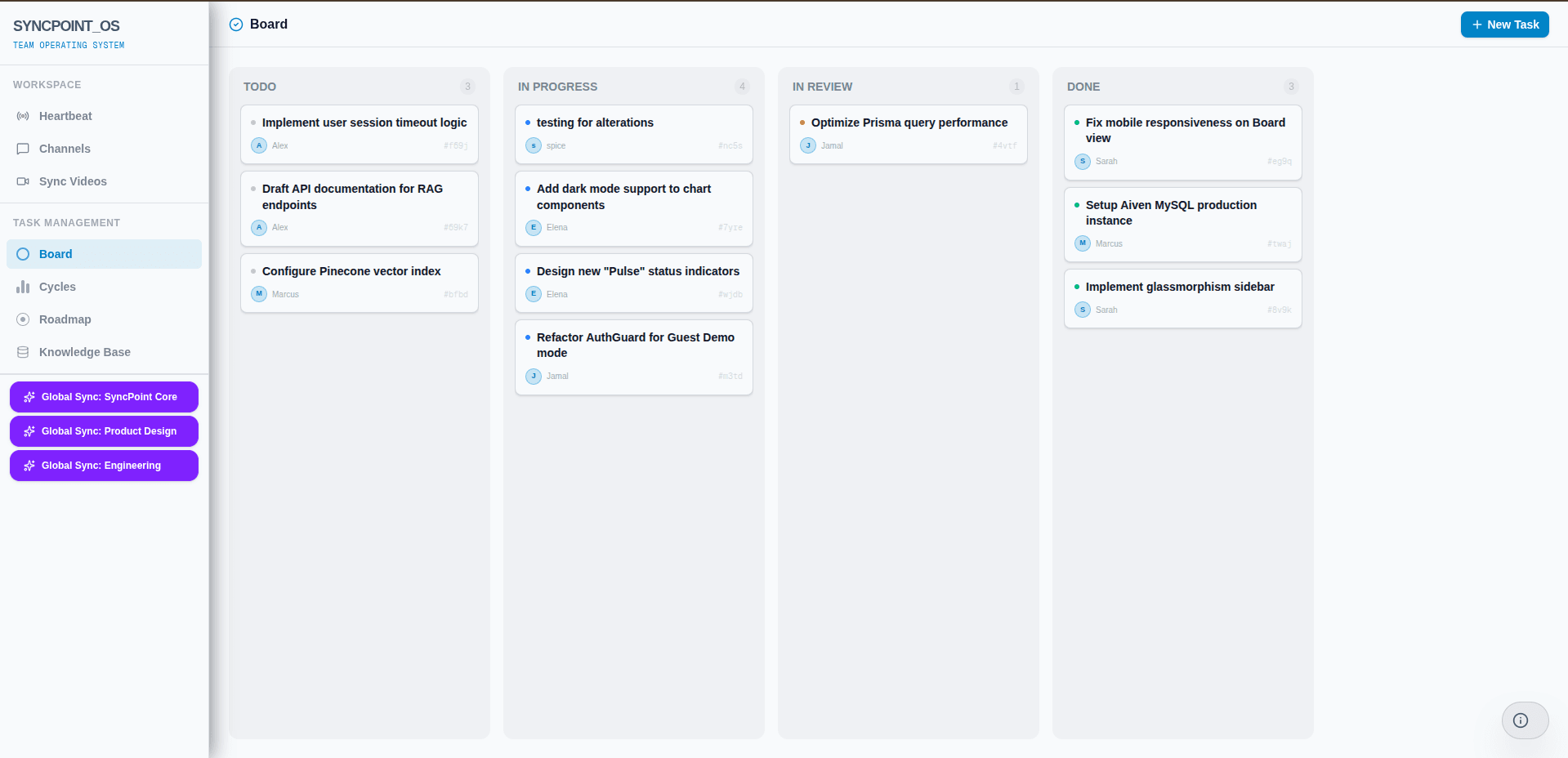
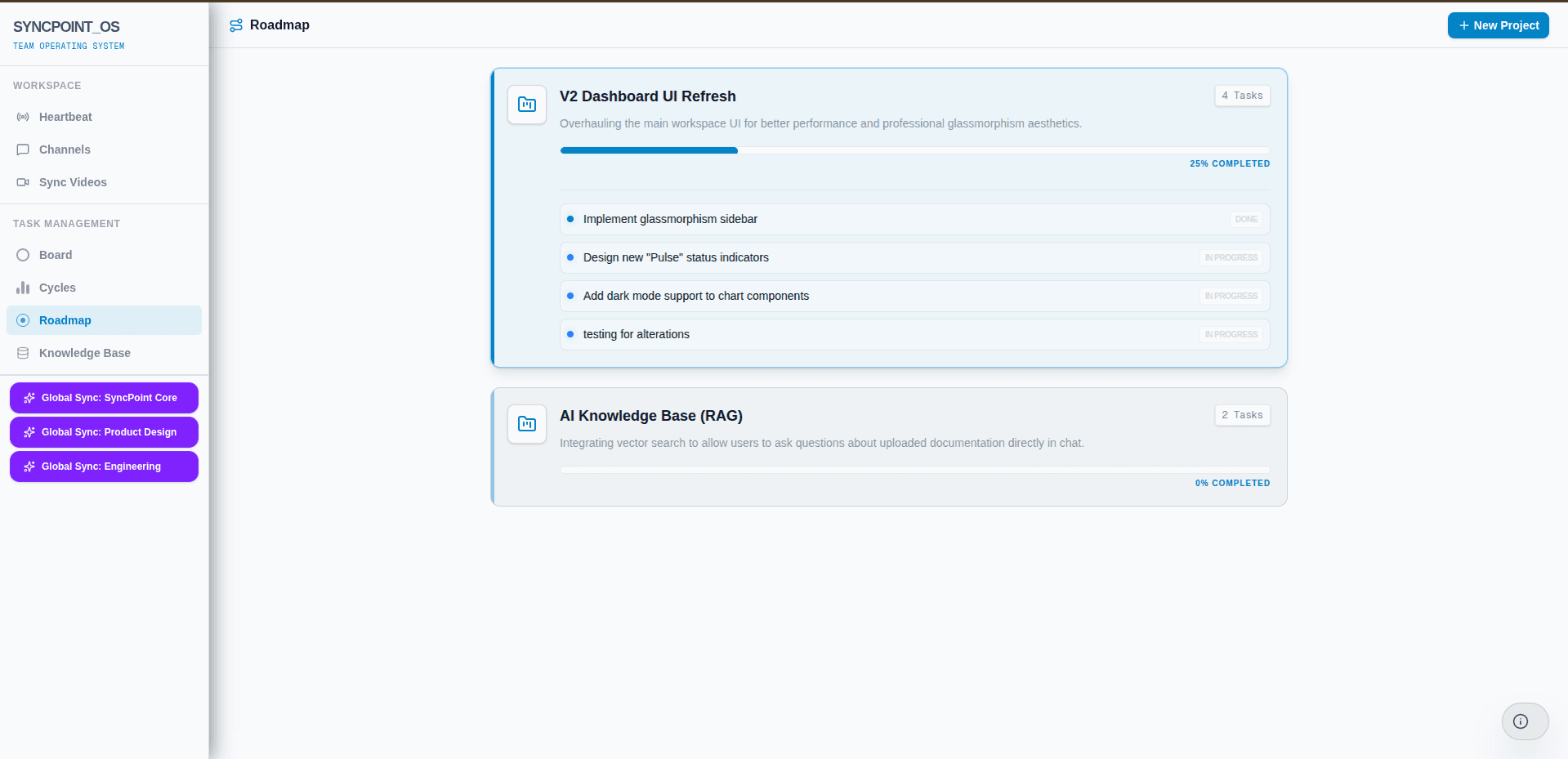
The application's backbone relies on complex relational modeling within MySQL, managed via the Prisma ORM. This setup efficiently handles the heavy many-to-many relationships between users, teams, and sprints, utilizing optimized indexing and batched data fetching to maintain a 'snappy' feeling even when loading high-density Kanban boards.